05.06.2026
Cornwall is one of those rare places where magic happens and where geopolitics, history, mythology, and cultural memory seamlessly converge.
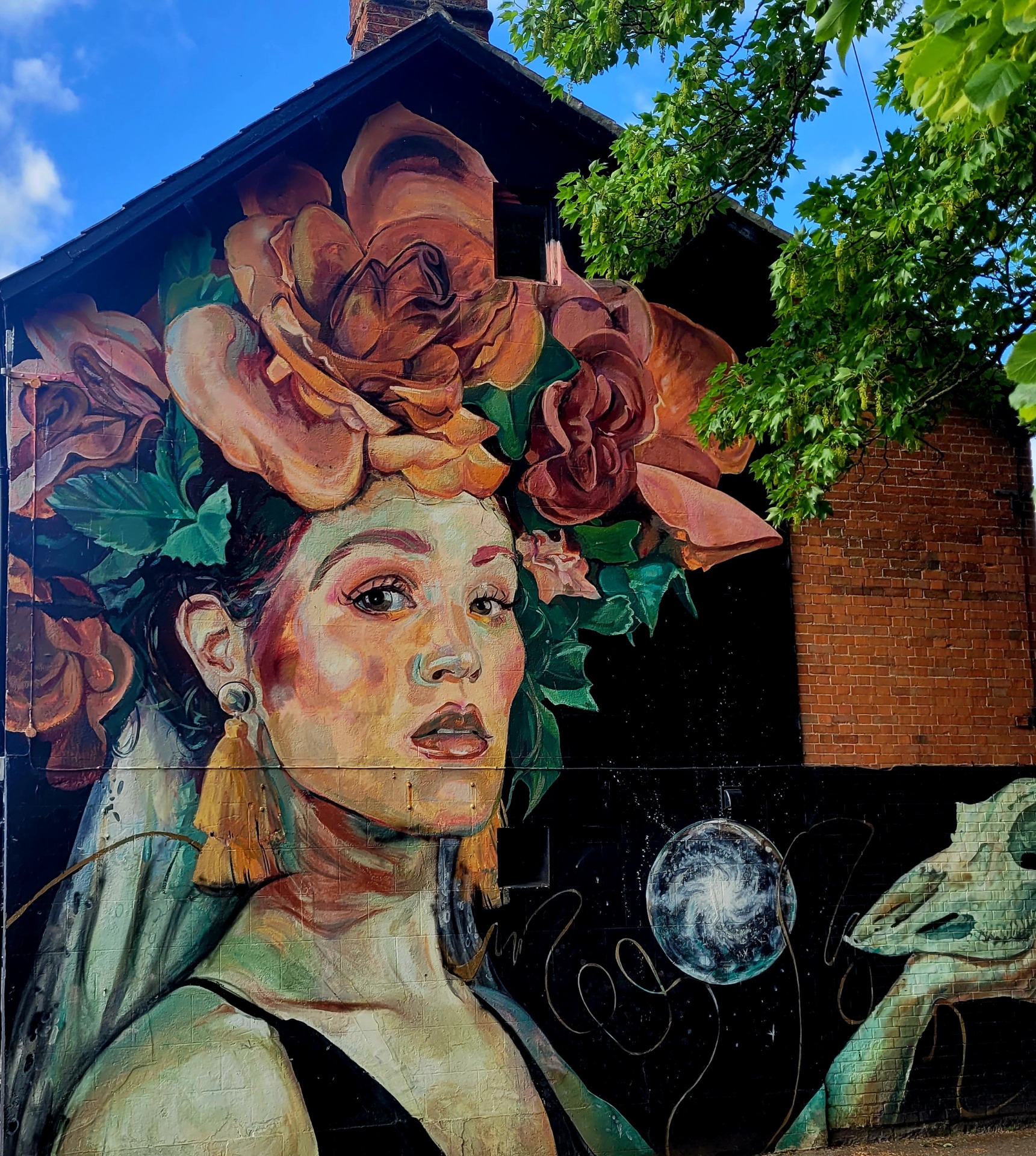
Artemis in the Goddess Temple, Excalibur at Chalice Well, and Cerridwen in Tintagel Parish Church - Cornwall is one of those rare places where magic happens; and where geopolitics, history, mythology, and cultural memory seamlessly converge. A place of profound historical significance within Europe’s collective memory, while simultaneously becoming increasingly shaped by tourism, mysticism, and contemporary spiritual projections that often transcend the historical record.
This region also played an important strategic military role during the Second World War. Its rugged coastline formed part of Britain’s maritime defense architecture and functioned as a strategic center for coastal surveillance, radar monitoring, and the control of Atlantic access routes and supply lines, particularly those coming from the United States. The region’s defense infrastructure protected the approaches to the Bristol Channel and served as an important operational area during the preparations for D-Day.
Plymouth was also one of the central naval ports of the British Empire and remains one of the most important locations of the Royal Navy today, particularly because of the Devonport Naval Base, the largest naval base in Western Europe.
Myths and geopolitics seem to merge into one another in the rugged landscapes of Cornwall, where cliffs meet the Atlantic and ancient mists drift across the moors. Around Tintagel Castle, traditionally associated with King Arthur, and the small town of Camelford, I encountered not only the spiritual heart of the Arthurian world, but also a remarkable geopolitical landscape shaped by history, military strategy, and symbolism in a unique and fascinating way.
Tintagel Castle was once an important long-distance trading port due to its rich tin deposits. In many ways, it was the Silicon Valley of the medieval world. Without tin there was no bronze, and without bronze there were no weapons. Wars were financed and trade routes across the Atlantic and beyond were influenced and controlled from this strategically significant region. Tin from Cornwall was one of the key raw materials of the ancient and medieval world, making the region not only economically powerful, but also highly significant geopolitically.
The region around Bodmin Moor has long been regarded as a liminal space. It remains a landscape of transition between worlds, realities, and identities. The Cornish language is still preserved and spoken. And ancient Celtic traditions, sacred sites, and legends are still deeply present. At Dozmary Pool, according to legend, King Arthur’s sword Excalibur was returned to the Lady of the Lake. This was a symbolic act marking the end of one cycle and the beginning of another.
Parallels can also be found in Chinese history. The Sword of Goujian, belonging to King Goujian of Yue, is often regarded as the Excalibur of the East. Both swords symbolized the rightful claim to the crown and legitimate rulership. The remarkable difference, however, is that the Sword of Goujian truly existed. It was discovered in 1965 in Hubei Province and was found to be almost perfectly preserved despite being over two thousand years old. In China, the sword symbolized true political and imperial power. In Europe, Excalibur represented divine destiny and sacred legitimacy. Yet both swords stand for exceptional craftsmanship, heroic leadership, and the enduring connection between mythology, power, and civilization.
Nearby, Slaughterbridge is often associated with Arthur’s final battle. The symbolism is striking: the collapse of an old order and the uncertain emergence of a new one. Such places embody archetypes of decline, transformation, and renewal. These themes are resonating strongly in today’s geopolitical arena, while this important strategic dimension lies hidden within this mystical landscape.
Davidstow Airfield and Cornwall at War Museum near Camelford once served as a significant RAF and NATO airfield during the Second World War and the Cold War. The nearby naval axis between Plymouth and Cornwall remains one of Britain’s most strategically sensitive regions. Plymouth continues to host key facilities of the Royal Navy, while former RAF infrastructure throughout Cornwall reflects the region’s longstanding military significance within the transatlantic security architecture.
This coexistence of mythological imagination and military infrastructure creates a fascinating geopolitical space. Cornwall is more than a peripheral region of Britain. It emerges as a symbolic frontier between the old and the new world order. Avalon, Arthur, ancient Celtic spirituality, NATO infrastructure, Atlantic strategy, and the shifting balance of global power all intersect here.
In many ways, Cornwall represents Europe itself. A Europe caught between memory and transformation, between land and sea, between empire and fragmentation, between mythology and geopolitics and the difficulty in taking over responsibility in the spirit of its own history and strategic place in the world. The landscapes around Tintagel and Camelford are therefore not only remnants of the past. They may also serve as symbolic gateways into a new geopolitical era.
Places such as Glastonbury Tor, Avalon, and Avebury remind us that civilizations are not shaped by military power and economic systems alone. Myths, legends, landscapes, symbols, and collective memories equally influence how European societies understand themselves and their place in the world. At the same time, modern commercialization has not spared the world of myths and legends. The streets below Glastonbury Tor are filled with shops selling crystals, mystical artifacts, Buddhas, and esoteric objects from around the world, creating the impression of a spiritual marketplace where myth, commerce, and contemporary spiritual projections converge.
Since Brexit, EU funding has been discontinued, and the region has been searching for new sources of income. In addition, the dream of affordable housing has become increasingly unattainable due to the excessive number of holiday properties and vacation homes.
However, the problems arise, when spirituality becomes merely an aesthetic consumer experience. A mixture of wellness, myth, and identity offerings without genuine depth or any real engagement with history, power, or social responsibility. In Europe in particular, this growing tension is becoming increasingly visible: on the one hand, digitalization, geopolitical insecurity, economic pressure, and social fragmentation; on the other hand, the search for rituals, mysticism, a connection to nature, and “alternative truths.”
Perhaps this is why we are currently witnessing a kind of return of myth to politics and culture. It is no coincidence that identity, narratives, symbols, and emotional storytelling once again play such a central role today. Questions of identity, belonging, and civilizational memory are returning to the center of geopolitical discourse in Europe.
The era of the EU as merely a political and economic project may be approaching its limits. It is time to view Europe once again as a geographical, cultural, and historical continent shaped by centuries of shared narratives and symbolic reference points. This is a unique force of Europe.
Three mythical archetypes could symbolically represent the transitional phase in which Europe and the world currently find themselves: Artemis, Excalibur and Cerridwen.
Artemis is not imperial. She protects her realm, yet she does not expand aggressively. This is particularly relevant in a time when many states are wavering between globalism, bloc thinking, and renewed sovereignty. Europe must once again learn to act independently; not only militarily or economically, but also culturally and intellectually.
Excalibur symbolizes legitimate order and truth. The old unipolar order lost its moral self-evidence. New centers of power are emerging; BRICS, Eurasia, regional blocs, and new civilizational spheres with wisdom. We are often still lacking the recognition of this new global world order.
Cerridwen is perhaps the most geopolitically powerful archetype of all. She represents transformation through chaos and transition. Old orders are dissolving; new ones are emerging, as yet not fully formed. This is precisely what we are witnessing today.
This may explain why such places are once again attracting so many people today. Not necessarily because of esotericism, but rather because the modern world increasingly appears technocratic, cold, and disconnected to many.
The world is moving away from rigid power blocs toward a multipolar and increasingly multiversal world order. Yet transformation always requires wisdom, cultural rootedness, dialogue, and sovereign identities rather than ideological camps.
Between the cliffs of Cornwall and the myths of Avalon, I increasingly recognize and feel that geopolitical spaces emerge not only through borders and institutions, but also through shared cultural memory and historical consciousness. Geopolitics are not shaped solely by power, economics, and military force. Myths, landscapes, memories, and cultural identities also shape civilizations and worldviews. Both have their place: Rationality and intuition.
What Europe truly needs, including Russia, is a new round table founded not on power politics, military blocs, or spheres of influence, but on shared memories, cultures, languages, and identities of the heart, in the spirit of Jacques Ancel.