25.09.2026
Are we not chasing ghosts and wishful thinking when we repeatedly try to portray geographic Europe like a bloc, like a monolith that the EU is still unsuccessfully trying to establish?
The failure of this EU project, increasingly reflected in the population’s unwillingness to accept EU directives and regulations, is more than evident. And, with Brexit back in January 2020, we were certainly witnessing the first major culmination of this mood in what is likely to become a very long series of future events accompanying the geopolitical transformation of Europe and, indeed, the world as a whole.
The fluid matrix of today’s geopolitics is a multiversal flow. Geopolitics is no longer a game between poles, between the East and the West, between BRICS and G7, or global actors within a rigid concept. We now live in a fluid, multi-layered world where parallel systems of influence exist side by side. Navigating through this ever-changing landscape means that nations and leaders cannot rely on old alliances and old structures.
The future belongs to those who actively build bridges across political and economic divides. Understanding our multiversal world order means learning to accept its intricate, layered forces; as true power no longer really originates through control. It lies in the ability to connect overlapping realities and find shared ground in our fragmented world.
The USA, China, and Russia have developed political and geopolitical models shaped by the dimensions of their vast territories and continental spaces. These countries see themselves and the world in completely different dimensions, even though China in particular is actively reshaping itself in many ways to keep its culture alive in our modern times.
Europe is fundamentally different, formed from multiple sovereign countries. Europe’s geopolitical and political thinking therefore needs to function more like a kaleidoscope. Flexible and constantly rearranging itself, allowing its individual components to sparkle in different constellations. New kaleidoscopic forms emerge, dissolve, and come together again in ever-changing patterns. Europe’s myths and mysteries continually create new configurations. This is Europe’s true superpower: not rigidity or stubbornness, but the ability to remain fluidly mobile within the flow of multiversal dynamics.
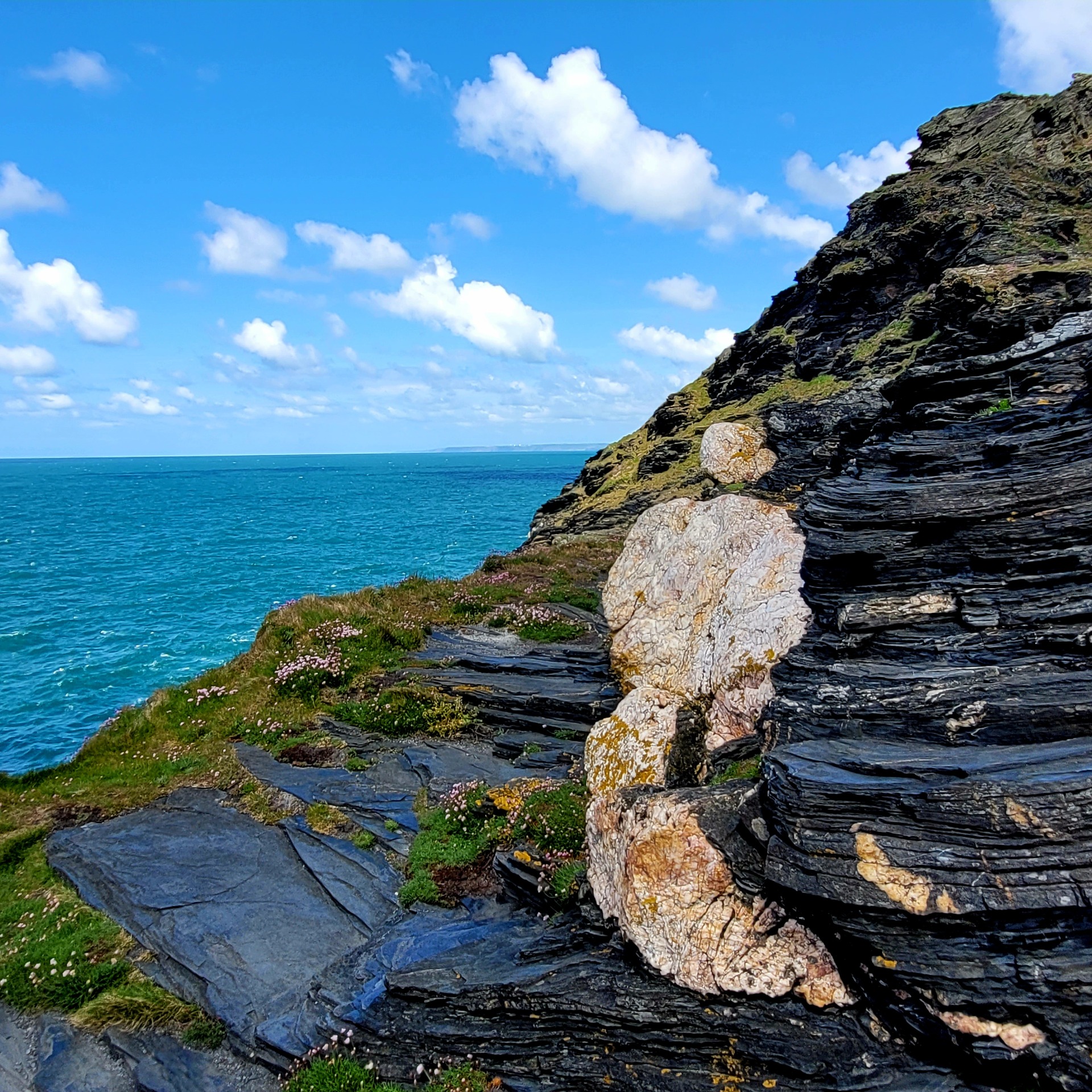
And what would Europe be without its rebels? Brittany, the Basque Country, Cornwall, Wales, Scotland - just to name a few, regions that, in the past and in the present, have preserved distinctive identities and repeatedly challenged political centralization and distant authorities.
The Celts are still everywhere and the Celtic spirit dwells within us. Priestesses, princesses, druids, and the geopolitical rebel spirit: a European freedom DNA that invisibly connects Europe across landscapes, languages, myths, and centuries.
Different civilizations have developed their own concepts for describing the invisible forces of life, vitality, inspiration, and consciousness.
In Celtic traditions, Nwyfre can be understood as a vital force, the breath of life that animates living beings and connects them with the cosmos. It evokes parallels with Qi in Chinese thought and Prana in Indian traditions. Awen represents inspiration: the flowing spirit of creativity, poetry, and spiritual illumination. In Chinese thought, Shen represents spirit, consciousness, and the subtle dimension of human existence associated with the cultivation and expression of Qi.
Different words; different traditions; different worlds of meaning. Yet they all point toward something that cannot simply be reduced to material power, but a spiritual force that connects us all. This is also part of Europe’s almost forgotten geopolitical strength: the ability to understand different realities without forcing them into a single universal model.
King Arthur’s Round Table symbolized more than unity. It represented a chivalrous code sworn as an oath: to put personal ambitions aside, protect the weak, and serve a greater purpose. There was no seat of power, no head of the table, and no hierarchy. Every knight carried the same responsibility and had the same voice. The Round Table also became part of a wider symbolic world connecting British and French traditions, the Red Dragon and the Fleur de Lys.
Modern conference tables often follow a very different principle. The person seated at the head can oversee and dominate the entire room, while opposing sides face each other across a physical barrier that may reinforce division rather than cooperation. Round tables do still appear today at international meetings, including G7 and EU summits, particularly during public events, television broadcasts, and official photo opportunities. Yet the symbolic image of equality does not necessarily reflect the political process itself. Decisive negotiations frequently take place behind closed doors before participants gather around the symbolic round table.
The original spirit of Arthur’s Round Table has largely disappeared from modern geopolitics. Negotiations are shaped by interests, influence, and strategic positioning rather than by an oath of chivalry to set aside individual egos and support those who are weaker. True dialogue begins when no one seeks to dominate and every participant has an equal place at the table.
Many people know the magic of Glastonbury Tor and the sacred Chalice Well, home to the famous Red Spring. Just a few steps away, on the opposite side of Wellhouse Lane, another sacred water source emerges: the White Spring.
Unlike the open gardens of Chalice Well, the White Spring flows within a dark, cave like Victorian stone building that today serves as a candlelit water temple. Although separated by only a few meters, the two springs could hardly be more different.
The two springs emerge from the same sacred hill through different underground geological formations. The Red Spring, rich in iron, flows with a distinctive reddish color and has long been associated with legends surrounding the Holy Grail. The White Spring, flowing through limestone formations, emerges clear and leaves pale mineral deposits along its course. They originate beneath the same sacred landscape; yet their waters remain distinct. They have no need to become identical.
We all share one planet, and we are becoming increasingly interconnected. Our economies, technologies, trade routes, and cultures are more closely linked than ever before. Yet different histories, political systems, cultures, identities, and worldviews flow beneath this global landscape; each following its own course.
The Red Spring and the White Spring demonstrate that interconnectedness does not require uniformity. They share the same sacred landscape, yet each preserves its own character. Neither replaces the other; neither loses its identity. Like Yin and Yang, the two springs remind us that harmony is part of the natural order. It does not arise from uniformity, but from the peaceful coexistence of distinct realities.
And this is precisely Europe’s true superpower: not becoming a monolithic geopolitical, economic and political global player, but remaining a living embodiment of different identities, cultures, regions, myths, languages, and perspectives. A kaleidoscope never creates beauty by making every pattern identical. The objects in the kaleidoscope remain the same, just their configuration, their pattern changes.
In a today’s world dominated by harsh geopolitics, do we all need a little more of that special nostalgic manor house feeling? We long for a beautiful and peaceful countryside that offers a cozy, soothing atmosphere. We crave a world of tradition and nostalgia, defined by a safe and polite environment. These manor house estates evoke social etiquette and elegant dinners, where conflicts are managed and resolved through polite dialogue, rather than the bitter divisions and high-stress chaos of modern times.
What Europe, including Russia, truly needs is a new round table founded not on power politics, military blocs, or spheres of influence, but on shared memories, cultures, languages, and identities of the heart, in the spirit of Jacques Ancel.
Above all, it reminds us of the importance of keeping our sense of humor and enjoying life within our wonderful, multiversal world.