
20.11.2026
Königsberg/Kaliningrad Oblast; Hong Kong; Transnistria; the former Memel Region; the Suwalki Gap—these are some examples of liminal geographical spaces where identities are hybrid and sovereignties blur—places that do not fit into rigid geopolitical bloc structures and yet are fascinating pieces of the puzzle that is our multiversal world order.
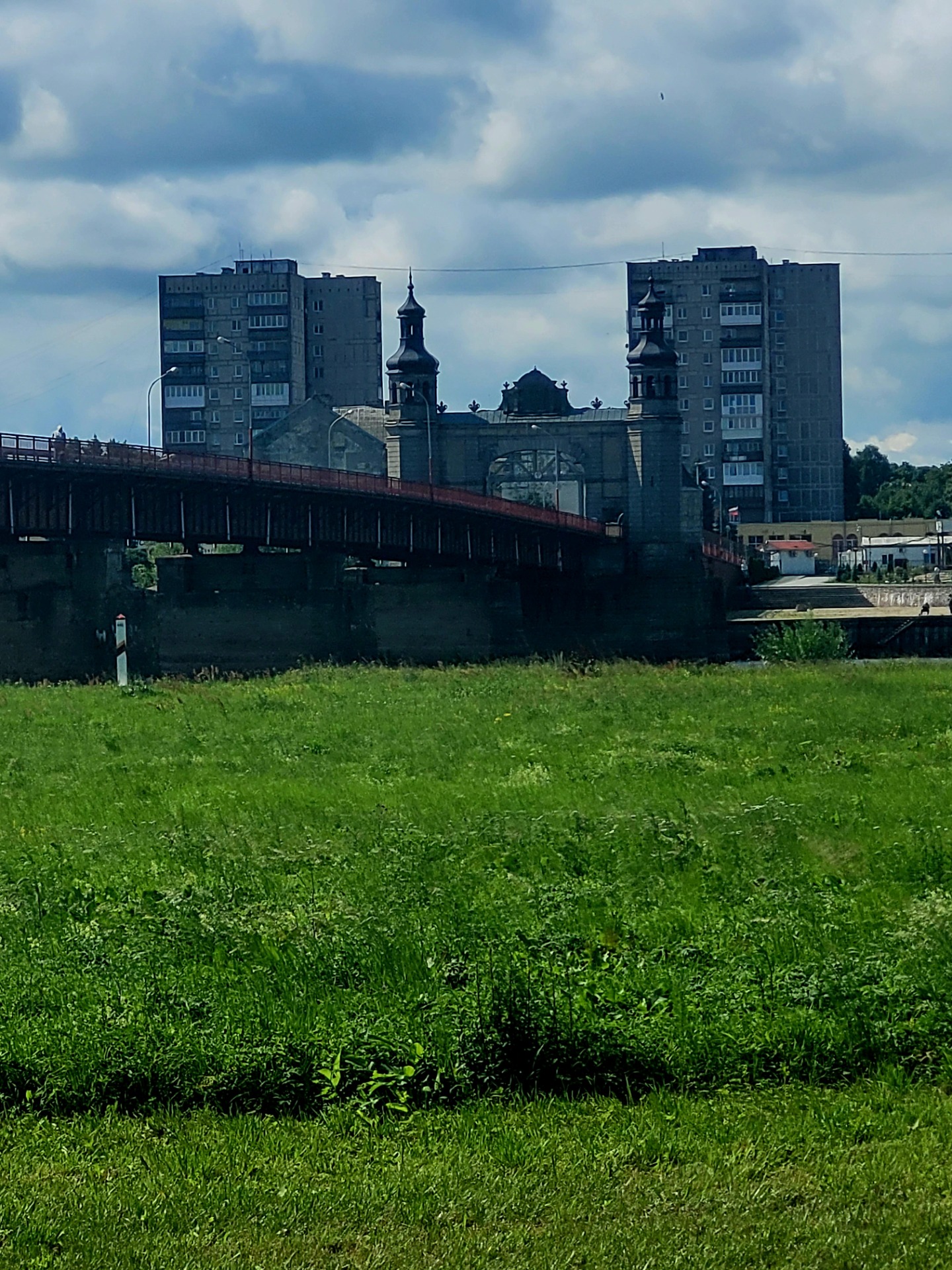
All these geographical spaces share an unmistakable, hidden, and subtle power, for they act as a seismograph of world politics. They compel the global power centers in Moscow, Washington, and Beijing not only to grapple with ambiguities, but also to acknowledge them—to recognize them for exactly what they are: a precious part of the multiversal world.
When the global world order shifts, these liminal spaces are the first to react. They can be dangerous breaking points in a monolithic geopolitical sense or serve as bridges of diplomacy, communication, and harmony.
Königsberg, in what is now the Kaliningrad Oblast, is the former home of my mother’s side of the family. Geographically surrounded by the EU and NATO, today’s Kaliningrad is an integral part of Russia, both politically and militarily. The Kaliningrad Oblast has a year-round ice-free port in Pillau—now known today as Baltijsk—which ensures unimpeded access to the Baltic Sea region. Until its opening in 1991, this entire region had been a strictly sealed-off military restricted zone since 1945.
Kaliningrad possesses enormous hidden strengths. Beneath the current heavy Russian military presence lies a deep historical, East Prussian heritage that today’s population increasingly cherishes and values. But this region is today a cultural space forced to physically endure the radical division between East and West as well as geopolitical bloc mentality. My trip to Kaliningrad revealed a restless city with almost wild architecture that oscillates between Prussian history, Soviet influences, and post-Soviet reality.
Hong Kong is caught in a limbo of “One Country, Two Systems”—the visual and legal “no longer” of a British Crown colony and the “not yet” of a complete, monolithic integration into the Chinese mainland system. Despite this ambiguous situation, the city possesses hidden strengths: the identity of Hong Kongers is highly hybrid as many distinguish themselves from so-called mainland Chinese. Hong Kong balances between Western hyper-capitalism, English common law, and deeply rooted Cantonese-Chinese traditions.
This narrow strip of land between Moldova and Ukraine reveals itself as a fascinating experience—almost like a journey through time. Transnistria declared its independence in 1990 but is not recognized by any UN member state.
Transnistria is a living museum of Soviet geopolitics, with its own government, administration, currency, and military, as well as its own passports and a post-Soviet identity. The territory exists in a legal and political gray zone, with decisive Russian influence. Russian soldiers are stationed there, as well as are pro-Russian paramilitary units.
The hidden force: frozen in time, Transnistria serves as a buffer zone where Russia’s imperial legacy and the Republic of Moldova’s European integration efforts are locked in a stalemate.
Liminal spaces possess a unique, quiet power—they compel great powers to remain flexible to a certain degree. In the old Memel region, in historic Königsberg, or even in old Trieste, the people who lived there did not have to choose. They lived in a fluid geopolitical matrix reflecting the Chinese “both-and” approach. They spoke—and still speak today—several languages and juggle different cultures.
These spaces are open and fluid and thus function quite naturally, without classification or labels, like sensitive membranes of our multiversal world. They take the pressure off the tectonic geopolitical plates. They breathe; they are completely free.
But why do major powers find it so difficult to simply leave these spaces as they are? Why did Königsberg have to undergo a radical ethnic exchange in 1945, why did the old Memel region have to be brought into line, and why was Hong Kong stripped of its autonomy? It is the fear of losing control.
Autocratic systems like today’s Moscow or Beijing—but also a West geared toward geopolitical hardline policies, with the U.S. in the lead—suffer from a deep fear of losing control. In classical geopolitics, a geographical space that cannot be clearly classified is regarded as a security risk or a traitor state. To avoid losing their influence, global powers attempt to freeze the fluid nature of these geographic spaces. Border fortifications, walls, and fences are erected. They forcibly impose a single, monolithic identity on the people, thereby destroying these free-flowing spaces and undermining an important aspect of geopolitical stability in our multiversal world order. Every time a power attempts to “clean up” a liminal space—such as the former Königsberg—and turn it into a rigid front line, it results in human suffering and displacement. And highly militarized borders.
The true art of diplomacy in the multiverse, however, lies in overcoming this fear of such “gray” areas. We must muster the courage to leave parts of today’s Kaliningrad, formerly Königsberg, Hong Kong, or the Baltic states as they are, as they have historically and culturally evolved, as fluid, free geographical spaces. Those who allow this liminality build bridges. Those who, out of fear, refuse to allow ambiguities pave the way for the next war.
We humans, too, are liminal. If geographical spaces and borders can be liminal or fluid, then this applies even more to the people. In a world where political actors in Berlin, Brussels, Washington, Beijing, or Moscow increasingly demand that we choose one side or the other unconditionally, the right to human liminality is an act of peaceful resistance.
Great powers often fear liminal people just as much as they fear liminal spaces, because they cannot easily be controlled or harnessed for a monolithic ideology. Yet it is precisely people with a fluid, multilayered identity who are the true architects of peace. Anyone who carries within themselves the experience that different cultures, languages, and family memories provide can coexist without fighting each other or having to choose between them, and loses all fear of the unfamiliar.
I experience this liminality through my own family history—that of my ancestors—and especially through my own life journey. As a descendant of refugees from Königsberg and Schneidemühl in Poland, having studied in France and gained significant professional experience in China, and having traveled extensively—especially to Russia—my identity cannot be squeezed into today’s rigid national borders. As a German, guided by my family’s emotional compass, my heart beats not only for places that today lie in Russia or Poland, but especially for France and China.
Thus, a person who thinks freely in a liminal way understands the other—be it Russia, China, or the West—not as an enemy, but as part of the same multiversal kaleidoscope.
The era of geopolitics, which defined spaces purely in binary terms as possessions or fortresses, has come to an explosive end in the 21st century. The militarization of societies, language, and military buildup will lead states and societies to economic ruin. Weapons and military equipment create no real economic value. The automotive industry, once the heart of the German economy, is cutting jobs on a massive scale, while the increased use of artificial intelligence is destroying countless jobs worldwide. The education system and infrastructure are in disrepair. Liberal-democratic political systems are mired in a deep crisis of confidence. Purchasing tanks or drones won’t help.
The monolithic mindset’s relentless attempts to freeze historical border regions in place with walls and missiles does not create security; rather, it paves the way for a global conflagration.
True, unmistakable power lies in the reactivation of these liminal spaces. In a multiversal world order, strategic nodes are no longer controlled militarily but functionally overlaid. They could transform from a dividing line into a breathing membrane.
Russia retains sovereignty, but the exclave has shed its status as a nuclear powder keg. Through the revival of shared, pre-national Baltic nature myths, the region has been declared a spiritual sanctuary of the Baltic Sea—a place that embraces its multifaceted history without being bound by it.
Alongside its Old Prussian roots and Russian present, the Prussian heritage is integrated into this dialogue as a unifying, German/European cultural layer: not as a nostalgic look back, but in the spirit of Immanuel Kant’s “Perpetual Peace.” At the heart of this new identity lies a conscious, constructive reconciliation with the Prussian legacy: Königsberg rises anew as an intellectual and cultural foundation. The philosophy of the Enlightenment, which once flourished at Albertina University, once again forms the region’s compass. Prussian virtues such as the rule of law, scientific curiosity, tolerance, and an urban civic spirit merge with Russian cultural vitality and the Baltic people’s connection to nature. Centering on the rebuilt Königsberg Cathedral on Kneiphof Island, a European forum is emerging where the histories of the Prussians, the Teutonic Order, the Duchy of Prussia, and contemporary Russia are told on an equal footing.
At a modern roundtable bordering the Pregel river, German thinkers, Russian artists, Lithuanian and Polish historians, and European economists sit at the same table as equals. The former military bastion of Königsberg is transforming into a duty-free “Holy Grail” zone of knowledge, economic connections and Eurasian cultural dialogue.
What was once NATO’s most dangerous land corridor bordering Lithuania and Poland is being demilitarized and transformed into an international special zone. Here, European high-speed trains intersect with the sealed Eurasian transit routes of China and Russia. The complexity of shared use disarms military logic.
Where strategists once identified it as Europe’s most dangerous bottleneck, a boundless space of interconnectedness is now opening up. This narrow land corridor is shedding its role as a military bottleneck and returning to its oldest, deepest purpose: to be a sacred grove in the heart of the Baltic region.
Inspired by the Alkai—the pre-Christian natural sanctuaries of the ancient Baltic Yotvingians—the primeval forests, bogs, and Ice Age lakes around Wigry, Augustów, and Dzūkija have been declared a cross-border, inviolable biosphere and peace reserve. Tank tracks give way to quiet pilgrimage and research trails; the Via Baltica becomes a lifeline for gentle exchange between Central Europe and the North.
In this calm landscape, foresters, Lithuanian poets, Belarusian civil rights activists, and guests from nearby Kaliningrad come together—not as neighbors behind barbed wire, but as guardians of a shared European natural and cultural heritage. Thus, the former geostrategic flashpoint is becoming the breathing heart of a new Baltic Sea community.
China is ending its attempt at monolithic standardization. Hong Kong is returning to its role as an economic laboratory, where Western law and the Chinese state economy coexist in a permanent, fluid matrix. Beijing recognizes that completely erasing Hong Kong’s institutional uniqueness would undermine its value as an international financial hub. Like a chameleon, Hong Kong’s institutional identity shifts depending on external pressures and Beijing's strategic needs. It projects political loyalty and security alignment inward toward the mainland, while simultaneously projecting regulatory familiarity, free-market openness, and rule-of-law reliability outward to global investors.
Global businesses can use Hong Kong as a buffer zone to access the Chinese market without fully exposing themselves to mainland regulatory risks, while Chinese state-owned and private enterprises can use it to raise foreign capital and expand globally. Instead of viewing the "One Country, Two Systems" framework merely as a temporary bridge toward full assimilation by 2047, this model treats the tension between Western capitalism and Chinese statecraft as a permanent, productive feature of China's global economic strategy.
A deep ideological friction still exists between Xi Jinping’s China Dream - national rejuvenation and full political unity by 2049 - and the concept of an autonomous economic and legal space. But these two goals are not mutually exclusive, they are instead strategically linked.
Political Unity Over Economic Uniformity: For Beijing, reunification and national unity primarily mean absolute political and security control, as enforced by the 2020 National Security Law. Once political loyalty is secured, Beijing does not need an economic or legal carbon copy of the mainland to fulfill its goal of national unity.
Economic Power as a Superpower Foundation: The China Dream aims to make China a leading global superpower by 2049. Without an international financial center offering Western legal standards and free capital flow, China would be severely handicapped in global competition, especially against the United States. Fully assimilating Hong Kong into cities like Shenzhen or Shanghai would destroy this vital economic tool.
Originally, the "One Country, Two Systems" framework was set for 50 years, expiring in 2047. Both Xi Jinping and the Hong Kong government could officially emphasize that there is no reason to abolish this system after 2047. It is increasingly framed as a permanent model, provided that the "One Country" and this Beijing’s sovereignty remains unchallenged.
A central pillar of the China Dream is reunification with Taiwan. If Beijing were to completely erase Hong Kong's distinct status, the "One Country, Two Systems" model would lose all credibility as a framework offered to Taiwan. An economically successful, nominally distinct Hong Kong continues to serve as a crucial showcase for Beijing.
Within Beijing’s leadership, there is constant friction between ideology, which implies security and control, and pragmatism, meaning securing economic growth. In recent years, national security has frequently overridden economic interests. Whether this chameleon approach works long-term depends on whether global investors can trust a Western-style legal system that ultimately sits under the political authority of the Chinese Communist Party.
The hidden forces behind our multiversal world order are based on the Arthurian principle: Power is not demonstrated through subjugation, deterrence, or weapons, but rather through the mediation of the security interests of all nations—including Russia’s—with roundtable diplomacy. The sword of confrontation is not wielded as a weapon but drawn from the rigid stone of mistrust as an instrument of balance.
In a multiversal world order, allowing for ambiguities and differing security interests does not lead to a loss of control. Only when the geopolitical buffer zones are finally allowed to breathe again will the multiversal world find its peace.